Upper Floor
Did you know that Washington state went dry four years earlier than the rest of the country? Washington banned the manufacture and sale of alcohol on January 1, 1916. National prohibition began on January 16, 1920 with the ratification of the 18th Amendment.
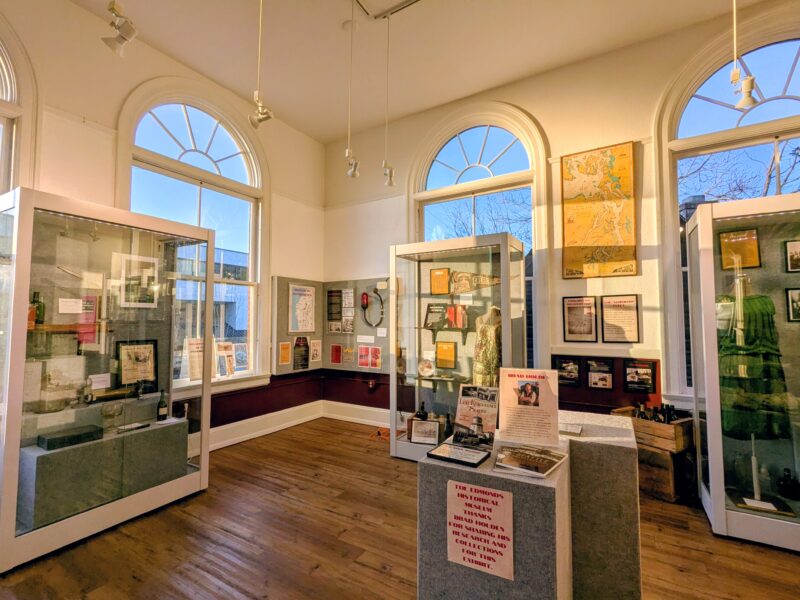
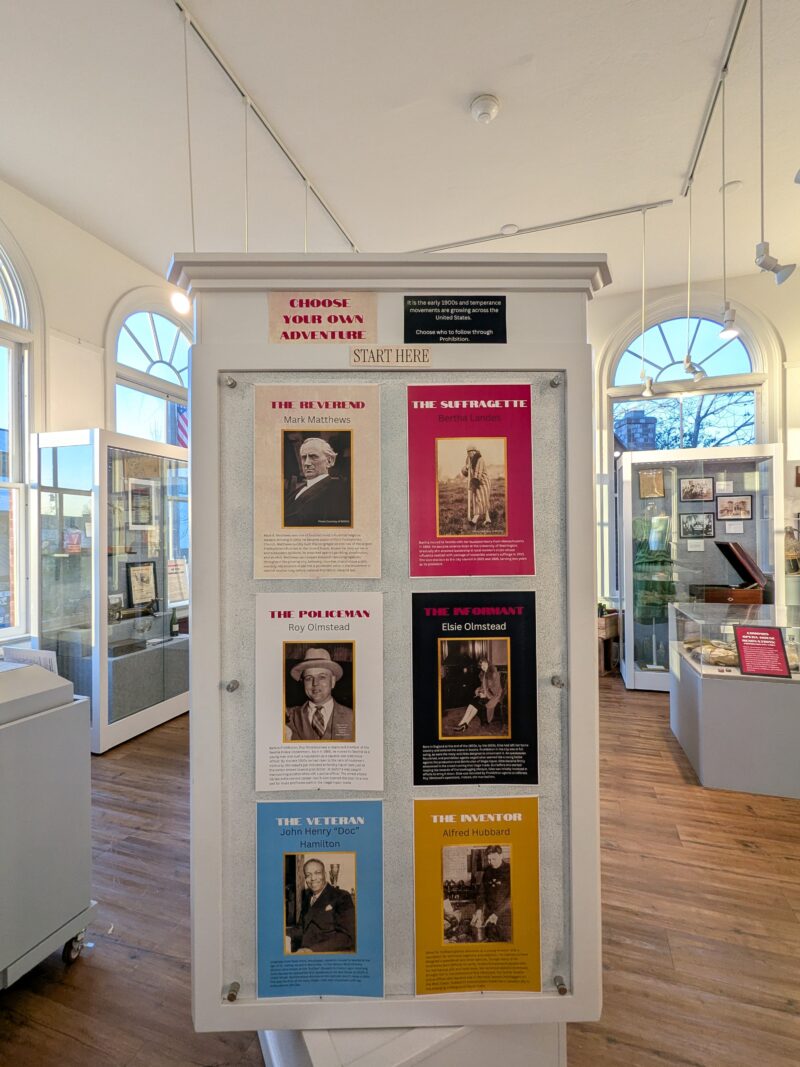
This exhibit looks at the national and cultural temperance movements that led up to Prohibition, focusing on the importance of women’s suffrage and the impact of women’s temperance votes. Come learn about the impact of Prohibition on South Snohomish County and regionally, from rum runners in the Puget Sound to the roadhouses on Highway 99.
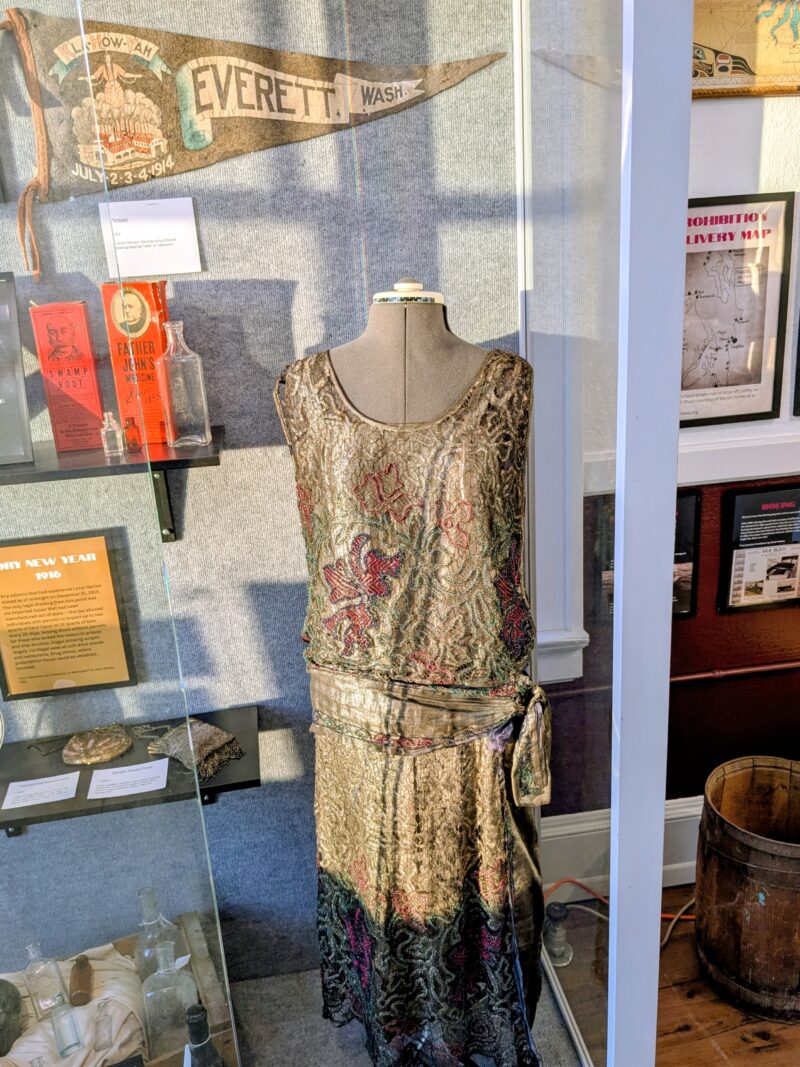
See what life was like in 1914 when Washington voted to go dry with objects and photos from the museum’s collections. Imagine what it was like to be a young flapper in 1920s Edmonds, featuring two dresses from the museum’s collections and a 1914 Victrola.
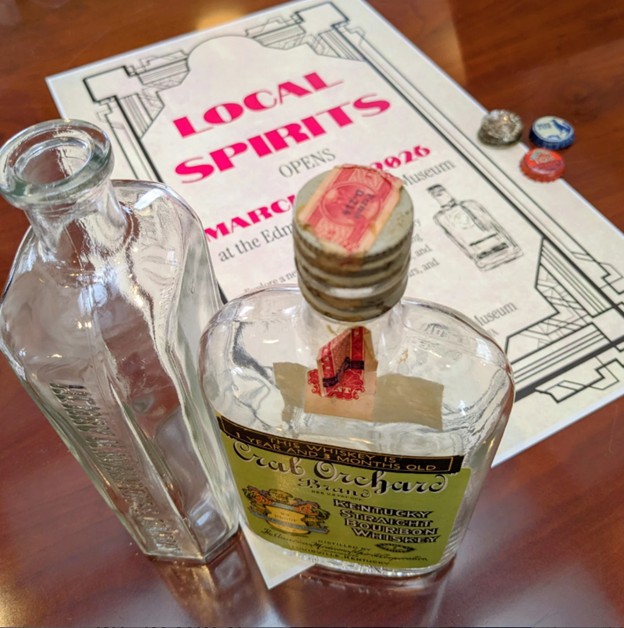
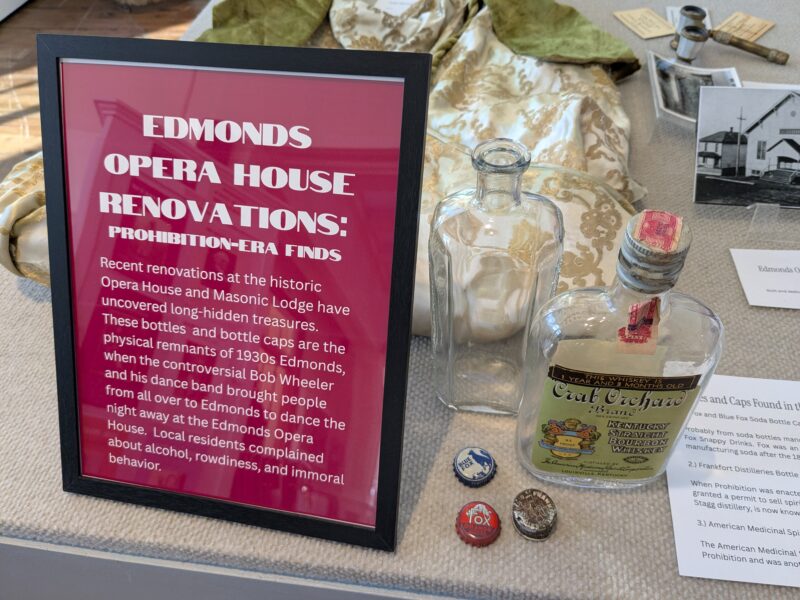
A highlight of the exhibit are bottles of “medicinal spirits” from the Edmonds Opera House, on loan from the Edmonds Masonic Center. During Prohibition, alcohol could be legally produced for medicinal purposes. These bottles– and soda bottle caps– were recently discovered during renovations on the Opera House, hidden in the rafters. They are fascinating remnants from a time gone by.
The Museum is grateful to local historian, Brad Holden, author of Lost Roadhouses of Seattle and Seattle Prohibition, for consulting on this project and sharing from his collection of roadhouse menus and matchbooks to be on display.