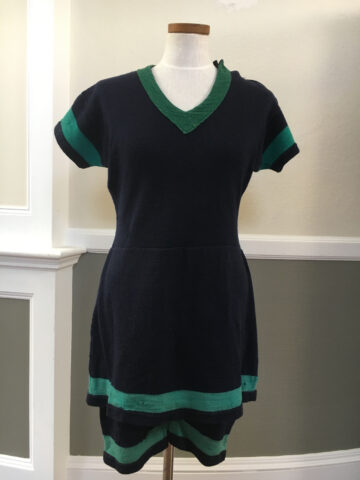
Swimming and going to the beach has long been a summer pastime in Edmonds. As we wrap up summer, let’s take a look back at the history of women’s swimwear with some swimsuits and photographs of people swimming from the Museum’s Collection.
Swimwear has been around since the mid-1800’s when improvements in rail travel and other transportation methods made it easier for people to travel to water for swimming and going to the beach recreationally.
The ideal of modesty in the 19th century called for swimsuits that more closely resembled a belted dress over long bloomers. These outfits were made so that the top portion of the swimsuit hung low like a dress to hide the woman’s figure. They were made from heavy flannel fabric that was both opaque and sturdy enough to not rise with the water. In the beginning of the 1900s one popular style was called “princess style” and was a one-piece with a knee-length skirt and stockings. Police patrolled the shores, stopping women who showed too much calf.
However, when swimming became an intercollegiate and Olympic sport peopled realize that the current swimwear lineup had been designed without functionality in mind. By the mid-1900’s, swimsuits became more streamlined and less heavy as the sport grew in popularity.

In 1907, Australian swimmer Annette Kellerman wore a revolutionary new one-piece bathing suit to a swimming demonstration in Boston causing a scandal. This new swimsuit revealed her legs and arms and she was promptly arrested for doing so. However, this swimwear forever changed the idea of the swimsuit and one-piece bathing suits became all the rage for well over twenty years.

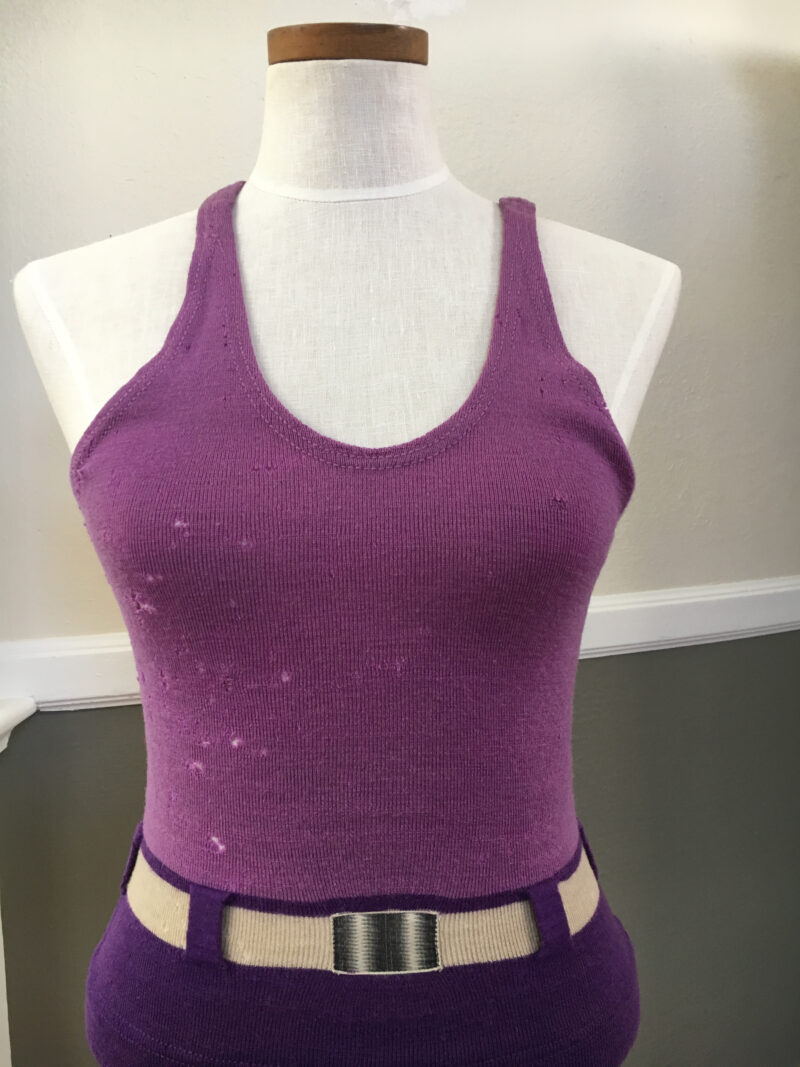
By 1910, swimwear was less restrictive with women exposing their arms and hemlines creeping up to the mid-thigh. It also became less heavy with designers having to use less fabric to conceal a woman’s figure. In the 1920’s, Hollywood and Vogue both popularized the idea of swimwear being sexy and glam. Swimsuits got smaller and the demand for them grew larger. The popular style was that of a romper-style suit in dark ribbed wool that covered part of the thigh and sagged when wet. Feminine cotton printed bathing suits often with little over skirts to hide the thighs gradually replaced the 1920’s fashion and advances in synthetic fabrics allowed swimsuit designers to become less reliant on wool as a raw material.


In 1946, fashion designer Louis Reard presented the bikini, which he based on South American tribal costumes and named after the South Pacific atoll. When it was initially conceived none of Reard’s usual models would agree to wear it and society reacted in horror. While it did not become acceptable to wear one until well into the 1950’s, two-piece bathing suits were popular in the 1940’s and ‘50’s. Those two-piece suits usually covered a woman’s navel and left only a bit of midriff visible.

Do you have any items relating to Edmonds and South Snohomish County history that you wish to donate to the Museum? We would love to hear from you! Please fill out the Artifact Donation form, https://historicedmonds.org/artifact-donation/. For further information, please contact us at artifacts@historicedmonds.org.

 Get to know our volunteers! Spotlight: Emily Scott
Really lovely, I adore your collection